

Bamboo Flooring Australia: Budget Buyer’s Guide for Melbourne DIYers
Apr
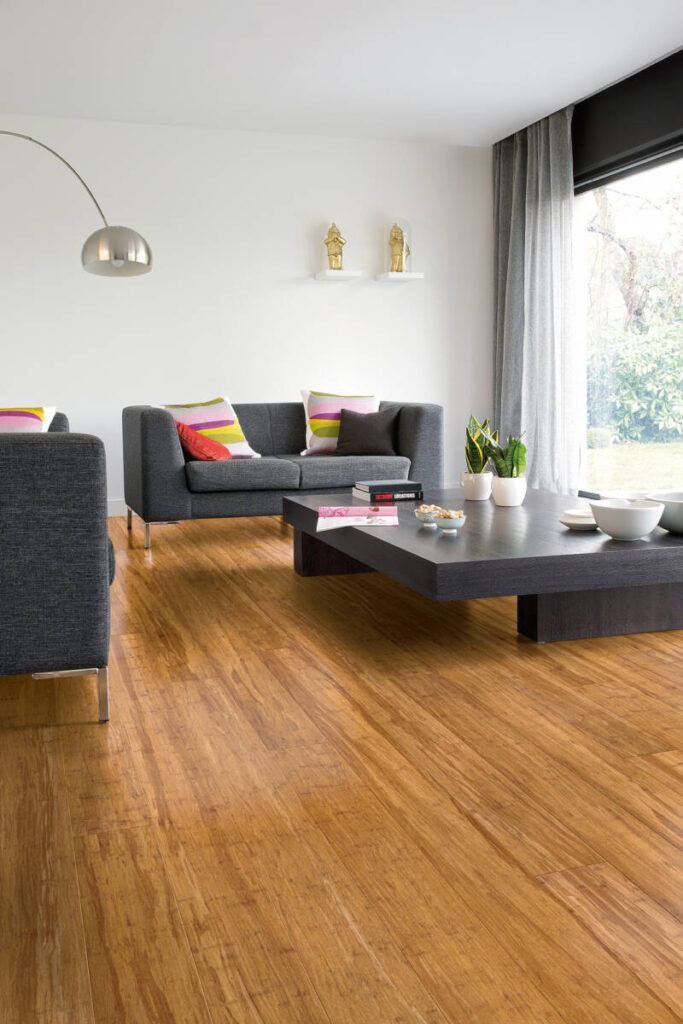
Bamboo flooring Australia has quietly become one of the cheapest hardwood-look options for Melbourne DIYers on a tight renovation budget. Because the product click-locks, sands beautifully and lands at a lower price per metre than most engineered oak, bamboo is now a serious contender for first-home buyers and owner-installers across the growth corridor.
Therefore, this guide walks through what bamboo is, what the grades cost, how it compares to hybrid flooring, and where it fits in outer-suburb Melbourne homes. Every price quoted here sits firmly inside the budget and supply-only lane.
Why Bamboo Flooring Suits Budget-Conscious Australian Homes
Bamboo is technically a grass, not a hardwood, but strand-woven bamboo planks rate harder than spotted gum and most European oaks on the Janka scale. Consequently, buyers get a floor that looks and behaves like timber at a much lower $/m² price point. In addition, bamboo matures in five to seven years, which keeps raw-material costs well below solid oak or blackbutt.
Furthermore, most bamboo sold in Australia today arrives as a pre-finished click-lock plank, so Melbourne owner-installers can lay it without a nailer, a compressor or a professional finisher. Overall, that combination is exactly why TFC stocks bamboo as a core budget line.
Strand Woven vs Engineered Bamboo: What You Actually Get
Bamboo flooring in Australia ships in two main formats, and understanding the difference before you buy can save a DIYer hundreds of dollars across a three-bedroom floorplan.
- Strand woven bamboo — shredded bamboo fibres compressed under heat and resin. Therefore, it is the hardest and most scratch-resistant option, with Janka ratings often above 14 kN.
- Engineered bamboo — a thin bamboo wear layer bonded to a plywood or HDF core. Consequently, it is slightly cheaper and more dimensionally stable for Melbourne’s dry summer to damp winter swing.
- Solid horizontal or vertical bamboo — older-style laminated planks that rarely beat strand woven on price today, so they are not a priority for budget buyers.
However, for outer-Melbourne owner-installers the practical choice is usually between strand woven (hardest, longest-lasting) and engineered bamboo (cheapest entry price). Both install the same way on a levelled slab or existing timber subfloor.
Bamboo Flooring Cost in Australia: What Your Budget Buys
Prices vary by plank width, wear-layer thickness and finish, but the table below shows the realistic supply-only ranges Melbourne buyers can expect in 2026 when shopping clearance and end-of-line stock.
| Tier | Format | Supply-only $/m² | Best suited to |
|---|---|---|---|
| Entry | Engineered bamboo, 12–14 mm click-lock | $29 – $39 | Rental refresh, first-home fit-out, secondary bedrooms |
| Mid | Strand woven, 14 mm click-lock, matt finish | $45 – $59 | Living areas in Werribee, Tarneit and Point Cook new builds |
| Upper | Strand woven, 15 mm wide-plank, brushed finish | $65 – $85 | Full-home owner-install in Craigieburn or Pakenham |
Because TFC sells supply-only from its Melbourne clearance warehouse, the installer margin typically added on top (usually $25 – $45 per m² in labour) stays in the buyer’s pocket. See the current run-outs on the TFC flooring sale page before committing to a grade.
Bamboo vs Hybrid Flooring: Which Is the Cheaper DIY Option?
Hybrid and bamboo are the two main click-lock options sold to Melbourne DIY buyers, so a direct head-to-head helps narrow the decision.
| Feature | Strand Woven Bamboo | Hybrid Flooring |
|---|---|---|
| Entry supply-only price | $29 – $39/m² | $25 – $35/m² |
| Waterproof rating | Water-resistant (not waterproof) | 100% waterproof core |
| Look and feel underfoot | Real timber warmth and natural grain | Printed decor, slightly harder sound |
| Re-sandable? | Yes (strand woven, 1–2 times) | No |
| Best room | Living, bedrooms, hallways | Kitchens, laundries, wet zones |
In practice, many Melbourne owner-installers mix the two: hybrid in the kitchen and laundry, strand woven bamboo through living and bedrooms. Consequently, they keep the waterproof advantage where it matters while paying a lower overall $/m² average. Compare the full range on the bamboo flooring collection and the matching engineered flooring range.
Installing Bamboo Flooring Yourself: DIY Tips for Melbourne Homes
Bamboo click-lock is one of the friendlier DIY floors because the boards lock angle-to-angle without glue on the joins. However, three things decide whether the finished floor looks professional or amateur.
- Subfloor levelling. Victorian growth-corridor slabs often drift 3–4 mm across a lounge room. Therefore, a self-levelling compound is far cheaper than re-laying a failed floor later.
- Acclimatisation. Leave the pallets flat in the room for 48–72 hours. Because Melbourne’s overnight temperature swing can reach 15 °C, skipping this step causes edge gapping within a month.
- Expansion gaps. Hold 10 mm off every wall, doorway and column. Overall, this is the single most common reason a DIY bamboo floor buckles in summer.
Before ordering a full pallet, request a physical sample so the grain and tone match the lighting in your actual living room — the online sample service posts them directly to Melbourne suburbs.
Where Bamboo Flooring Works Best in Growth-Corridor Homes
Bamboo is a smart pick for single-storey, slab-on-ground homes in Melbourne’s outer suburbs, where raw plank cost and DIY friendliness matter more than designer-brand recognition. In particular, it suits:
- First-home builds in Tarneit, Truganina and Wyndham Vale where a full floor must land under $4,500 supply-only.
- Investment refreshes in Craigieburn, Mickleham and Wollert where a harder wear layer stretches between tenants.
- Owner-renovations in Pakenham, Clyde North and Cranbourne where buyers want timber warmth without installer call-out fees.
In addition, delivery across the growth corridor is usually free on full-pallet orders — see the free delivery zones page for the exact postcodes covered.
Conclusion: Bamboo Flooring Australia — Value Without the Installer Markup
Ultimately, bamboo flooring Australia in 2026 delivers the hardest, cheapest and most DIY-friendly real-timber look on the Melbourne market. Because TFC sells supply-only from clearance stock, outer-suburb buyers lock in a genuine hardwood aesthetic at the kind of $/m² that usually only buys printed laminate.
Request a transparent, itemised quote or check current clearance stock here: Contact Our Melbourne Flooring Team.
Frequently Asked Questions
Is bamboo flooring cheaper than engineered oak in Australia?
Yes, generally. Entry-grade engineered bamboo starts around $29 – $39 per m² supply-only, while comparable engineered oak usually opens at $55 – $70 per m². Therefore, bamboo is often 30 – 40% cheaper for the same plank width.
Can I install bamboo flooring myself over a concrete slab?
Yes. Click-lock bamboo lays as a floating floor over a foam or moisture-barrier underlay on a levelled slab. However, Melbourne slabs often need a self-levelling skim coat first, and a moisture test is strongly recommended before laying.
How does strand woven bamboo handle scratches from dogs and kids?
Strand woven bamboo typically rates 12 – 16 kN on the Janka scale, harder than most Australian hardwoods. Consequently, it resists scratches better than standard oak but still benefits from felt pads and a doormat at entry points.
Is bamboo flooring waterproof enough for a Melbourne kitchen?
Bamboo is water-resistant, not waterproof. Therefore, for kitchens, laundries and bathrooms, hybrid flooring is the safer pick. Many Melbourne owner-installers run bamboo through living and bedrooms and switch to hybrid in wet zones.
Does TFC deliver bamboo flooring to outer Melbourne suburbs?
Yes. TFC delivers supply-only bamboo flooring across Melbourne’s growth corridor, including Werribee, Tarneit, Point Cook, Craigieburn and Pakenham. Full-pallet orders typically ship free within the standard delivery zone.